Showing posts with label Competency. Show all posts

Friday, December 13, 2013

Informational Text vs Non-Fiction (Common Core)


I am reading the November 2013 issue of ASCD's Educational Leadership magazine. It is focusing on the Common Core expectations for reading. The Common Core is calling non-fiction works "informational text", which brings to mind all those manuals that come with items we buy, but we rarely read them unless we need to know something specific. That is where it is falling apart when trying to bring Common Core to the public. The language was changed to something that seems daunting to an adult, so why would we force the youngest of our students to read "informational text"?

So as I'm reading the articles in the magazine, I'm having flashbacks to a couple of weeks ago as I was on the treadmill, watching Fox News. I was reading subtitles, and only half paying attention but there was this one woman who did catch my attention so I read along as she talked. She is a mom and she does not agree with the Common Core, so much so, she has started a group to try to stop it from being taught in her district. She is encouraging parents to pull their kids out of school to home-school them until the Common Core is dropped. Why? Because what the Common Core is asking her elementary student to read is too hard.
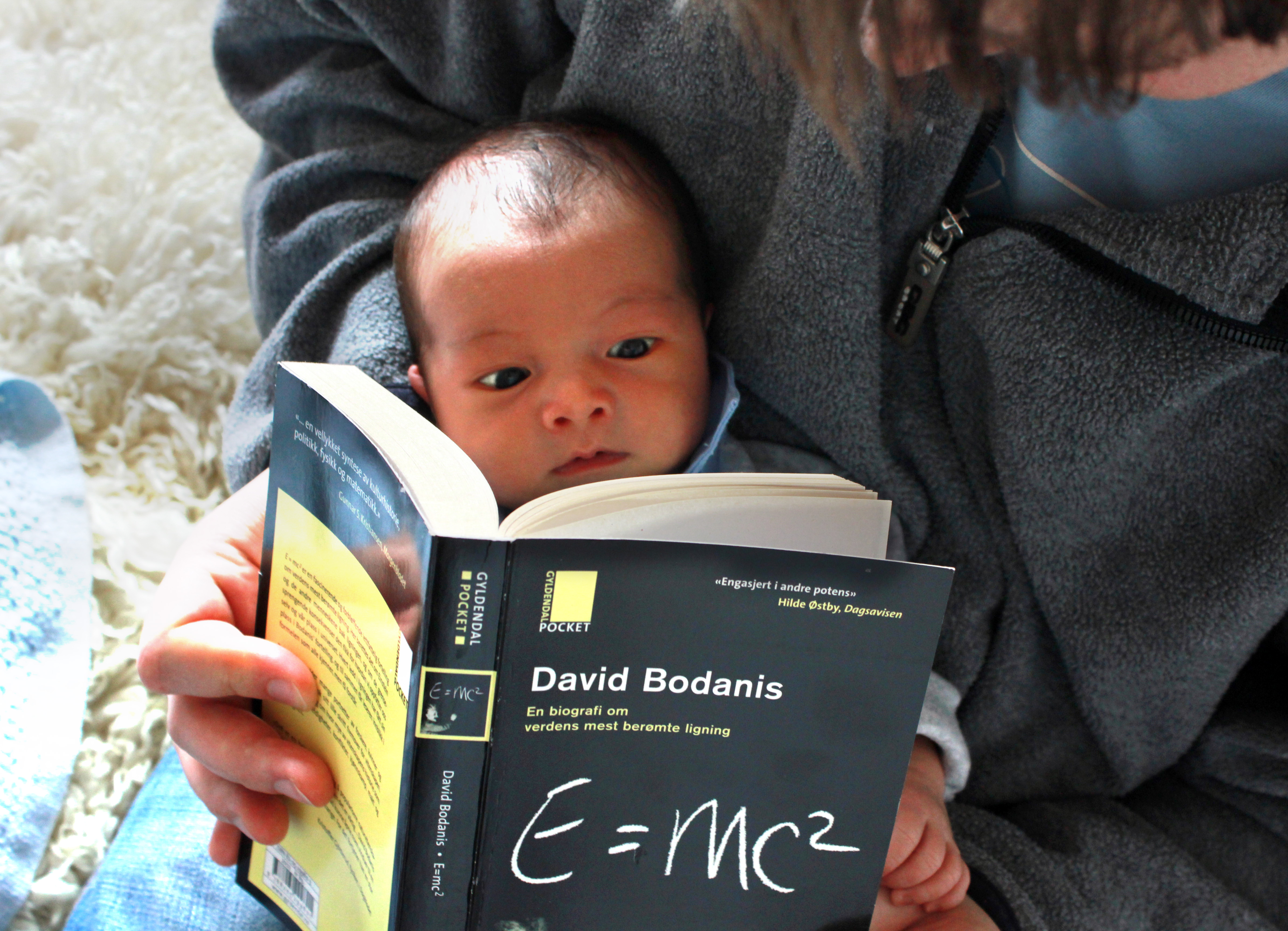
In the magazine there is a Research Alert about this very issue. "Text complexity has decreased over the past 50 years - but at the middle and high school levels, not the primary grades./There's nothing in the research that supports the connection between 2nd and 3rd grade text levels and students' future performance in reading texts at the college and career levels."(pg 8) So does she have a valid argument that by upping expectations at the elementary level, are we setting up students to become frustrated with reading? And I think a more important question that those two bullets present is: why has the complexity decreased for our secondary level students over the past 50 years?

That made me think about my own students. A lot of what we do in my Computer Science classroom requires research. They need to research when designing Web pages, because those require accurate content. They may need to comb through coding language libraries to find out what certain code fragments do before using them. They will often have to visit forums and weed out the solution to a problem they have encountered. All good skills that require close reading. So where is the loss?

I asked my students where they do most of their reading, and the majority say "online". That is their preference for research and informational text. If I ask them what they read for fun, most say "I don't read for fun", and a few tell me about some series of books they love in the vein of fiction. None talk about non-fiction as fun reading. Few to almost none read magazine or newspapers anymore either.

When I was teaching Kindergarten, many of my students gravitated to fun-fact types of books. Usually centered around animals, these books have large colorful pictures with facts about how fast they can run or fly, the habitat they live in, what they eat (or what eats them), and other facts to hold their attention. Some of my students loved these books more than the fiction books. What happens between Kindergarten and High School to make non-fiction less appealing?

I think back to my High School students. They see non-fiction as go to material. It is for what they must know in the moment, and not something that will be entertaining or enriching, and for them, this information is more accessible online but not in books. Where as fiction is entertaining.

Now, personally I have found many non-fiction pieces to be entertaining as well as informative. Many times I stumbled on those pieces by accident, thinking it was fiction, only to find out it was non-fiction half way through the book. But the books were compelling, because they read like a story and not like a store of information.

So as educators heading into the Common Core, we'll need to find compelling non-fiction to hook them into the informational genre of non-fiction. It doesn't have to be dry or only online. I think the biggest mistake that was made was calling it informational text, when it should have been called non-fiction text all along. The former sounds like some kind of monster waiting under the bed, whereas, the latter is a familiar friend we may want to revisit.

Friday, May 10, 2013

Time to Ditch The Textbooks

For many in education, the title of this entry is blasphamy. After all, if we do not have a text book for every student, how will they learn all this content we need to cover in less than 180 days?

My first year teaching (2006/2007), I walked in to my classroom and did not find a single text book that aligned with the classes I was going to start teaching in two short weeks. I panicked and pulled out the budget I that was designed by the previous teacher and quickly found that there was little money for text books. I started to dig in our book depository upstairs and found "Computer Literacy" text books, only to discover that they were from 1986. I was in 8th grade in 1986. I thought maybe there were some gems in the book I could use, but when I read the line "by the year 2000, computers will make us so productive that a full-time work week will only need to be 20 hours long." I laughed out loud, slammed it shut, and kept one copy as reference.
Image Source

All the programming books I found were for programming languages I wasn't slated to teach. In fact, they were for languages I didn't even know how to program in. Shelved those too. I ended up ordering books for my Web Design class. But then in under two years, I learned why my predecessor did not buy many text books.

Not only are text books expensive, but in my subject area, they are outdated almost as soon as I open the box they were mailed in. The software on the lab computers have been updated twice in the last 7 years, but the text books have not been updated at all.

I have gotten to a point now where I think this class would work best if I flipped it by making video tutorials this summer and putting links to the videos up as a part of a GoogleDoc.

I thought this was a problem that only I was facing in the building. So many teachers are isolated in the profession that we often think that we are the only one facing a problem, but this is not the case when it comes to text books.

At meetings I'm attending the subject of text books keep coming up. It is one of our biggest line items. Many are complaining about the new versions being bought to replace lost or damaged books do not match the old versions. If you keep a book long enough, its content won't match the world we live in. Jokes are made about text books talking about how the Vietnam War should be ended. Math books have word problems that students can't relate to. Science books have Pluto listed as a planet.

See where this is going? Information is not static, but text books are. Static, expensive, and seldom used by their intended audience .... the students. I watch the kids going down the hallway at the end of the day, and many of them are empty handed - without a backpack too. These same kids certainly have their phones out and punching away on the screen.

I've decided to ditch my text books and create a GoogleDoc for each of my classes instead. I plan on using this document to put in an outline of concepts, with a list of skills under each concept, connect the skills to the competency being covered, and eventually align it all to the common core. I'm ditching the text book and making an online living text book instead. In this outline, under each concept, will be links to online resources to help students along. I can include videos, websites, forums, etc. I plan on being the model of a digital citizen for my students by showing them how they can think outside the text book.

I often think of that viral video of the baby going from the iPad to the magazine. These are our future students, and I think they get frustrated with a static text book.

So why a GoogleDoc? Because everyone in our district has access to that technology without issues. We have lots of blocks on services I might have used instead for this type of hyperconnectiveness to online resources, such as Pinterest, but we don't have access to that in our district buildings.

So why not an eBook style instead? We're not there yet. Not enough to choose from yet. I am underwhelmed by what I've seen for my subject area.

I can make the GoogleDoc as interactive as I need it to be and I can invite my students to add to the outline as they find resources too. I could even make that a homework assignment as a part of the research competency. We can be a community of learners, collaborating online to build the resources that will help us toward our goal of learning the course content and meeting the expected competencies.

I hear that tiny voice saying, "but it isn't fair to those students who do not have access to technology outside of school." The technology inequality is quickly closing. Watch those kids walking in the halls with their cell phones, they can go to a GoogleDoc. Also, to do this you may need to survey your students on the first day of class. If a student states "no Internet at home", then find out if they have a DVD player. Videos can be put on a disk and sent home. GoogleDoc can be printed and put in a binder. So can websites. It is cheaper to maintain a binder for a couple of students in each class than it is to buy 30 text books for that class. And the information will be exactly what you want them to access, and as current as the last time it was updated online.

At this point you may have made up your mind to not give up your text book. But give it one more thought. When the idea of a text book was conceived, it was an ideal way to store important information in one place. The Internet did not exist yet, so it served us well for many many many years. But now, we have all kinds of information available to us, deposited on the World Wide Web, ready for us to tap in and share. We are not limited by what comes between the covers and a learning goal outline can be updated as needed at little to no cost. We will be fostering a community of learners who are more engaged because they created the "text book" together with their teacher.

Friday, August 17, 2012

Setting Up a Competency Based Classroom

Our school has been going through a redesign and transformation to a competency based system. Every year has been a little different than the year before. One of my pitfalls during this process has been the posting of the competency we are working on.

I started setting up my classroom this week and decided to make it a priority to come up with a system that would be easy for me to follow, and right in front of the students.

I have put my competencies on construction backed strips with magnets on the back. I sectioned off the dead space on either side of the SmartBoard portion of my white board. One section for each prep. Each class has 6 competencies. We usually concentrate on one at a time, sometimes two.

I can remove the competencies that we are not working on that day, which also frees up space in that section for me to write items of importance (such as the essential question!).


Helping students reflect on their work is also another area where I have struggled. I have put together a board of prompting questions for reflection on learning so that students will have it at their disposal.


Clock Watchers

Not really a part of the competency based class room but in a computer lab where the clocks on the computers have a different time than the clock on the wall, it can cause much confusion. To resolve this confusion, I have cleverly covered the clock in my room to encourage them to keep their eyes on their computers, where a clock is readily available.


I would like class room management ideas from other high school teachers who run competency based class rooms. Thanks in advance.

Wednesday, May 16, 2012

Grade Level Expectations

I read this post

Here is my response:


In 1999 I was not in education but I was a parent with students who were above grade level expectations. It was the Kindergarten teacher of my oldest who suspected her acting out in class was because she already knew how to read and write and was bored during those lessons. We lived in Arizona at the time and she suggested a Charter School for my daughter. My daughter had to go through testing during that summer before her first grade year to determine her placement. As a first grader she was changing classes throughout the day and working through levels (but never "grade" levels). She was promoted twice in her reading classes during the school year and then promoted (later demoted back) in her math class. She never saw herself as a "first grader" but she could say "I'm on level C for math and Level J for reading". She knew if she wanted to advance, she had to put in the work to do that and if she slacked off in the next level, that she could be sent back a level.

When we moved to NH in the middle of her second grade year, there was no grade level on her transcript so the school here had to call Arizona. Arizona told her that at their lowest level she would be in third grade. NH decided that she was too young to be in the third grade, so they put her in the second grade. The acting out began again. I asked them to promote her up so she would be challenged and assured them that if they did, the acting out would disappear. The school board did not agree with me and she has resented it ever since. Even now as she is getting ready to graduate with 7 more credits than our high school requires, she says "I could be in college right now".

So I agree, from experiencing it as a parent, and watching my own students, that grade level expectations sort of puts a kink in competency based learning. Students can be promoted (or demoted) based on real-time performance throughout the school year.

Friday, February 17, 2012

Living Through High School Redesign


My school has been going through redesign for a few years now. It is starting to wear on me, I feel tired all the time. Sometimes I wish I could turn back a few years and just be a teacher. Then, I watch Sir Ken Robinson and I'm reminded that the redesign is good work and will have long term benefits and I wish that what we are doing at our school was how school would have been for me.

Sometimes I feel I'm ahead of the group and I get pulled back. It makes me question my own thinking at times. Then when I give up on an idea for change, when it seems I'm not listened to, someone else says the same thing a few years after me and we start running with it. I'm happy to support an idea I had a few years before but it is discouraging to feel it was the right idea back when I had it only to give up at the time others want to adopt it. The right idea, but too soon.

Redesign is going to happen all across this country. We've been blazing some untraveled trails, which makes the work harder, because there is nothing to build on yet. We share our ideas with others who have watched us progress and want to do what we have done. We've had to make many changes as we discovered what didn't work, sometimes in mid-year. Some days I wake up and wish it was just done so I can go on with the business of teaching in a well-established system, but it's a strange organized chaos.

We are shifting from grading in the traditional way to grading competencies. Behaviors are separated out of the grade to keep it pure, so it reflects the learning. That means being late with an assignment is a behavior issue and cannot be addressed in the academic grade. So much work has built up to this.