Friday, December 13, 2013

Informational Text vs Non-Fiction (Common Core)


I am reading the November 2013 issue of ASCD's Educational Leadership magazine. It is focusing on the Common Core expectations for reading. The Common Core is calling non-fiction works "informational text", which brings to mind all those manuals that come with items we buy, but we rarely read them unless we need to know something specific. That is where it is falling apart when trying to bring Common Core to the public. The language was changed to something that seems daunting to an adult, so why would we force the youngest of our students to read "informational text"?

So as I'm reading the articles in the magazine, I'm having flashbacks to a couple of weeks ago as I was on the treadmill, watching Fox News. I was reading subtitles, and only half paying attention but there was this one woman who did catch my attention so I read along as she talked. She is a mom and she does not agree with the Common Core, so much so, she has started a group to try to stop it from being taught in her district. She is encouraging parents to pull their kids out of school to home-school them until the Common Core is dropped. Why? Because what the Common Core is asking her elementary student to read is too hard.
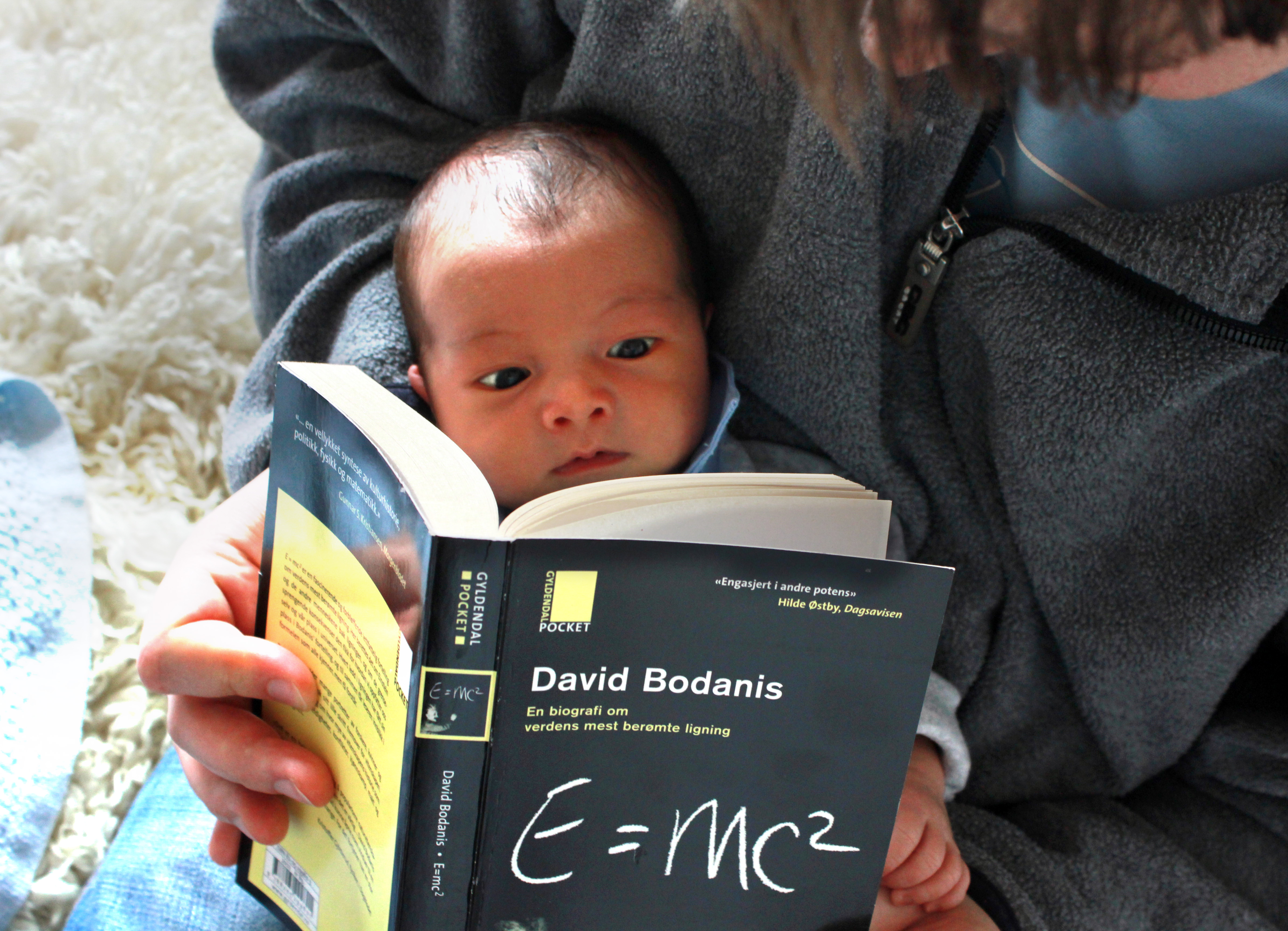
In the magazine there is a Research Alert about this very issue. "Text complexity has decreased over the past 50 years - but at the middle and high school levels, not the primary grades./There's nothing in the research that supports the connection between 2nd and 3rd grade text levels and students' future performance in reading texts at the college and career levels."(pg 8) So does she have a valid argument that by upping expectations at the elementary level, are we setting up students to become frustrated with reading? And I think a more important question that those two bullets present is: why has the complexity decreased for our secondary level students over the past 50 years?

That made me think about my own students. A lot of what we do in my Computer Science classroom requires research. They need to research when designing Web pages, because those require accurate content. They may need to comb through coding language libraries to find out what certain code fragments do before using them. They will often have to visit forums and weed out the solution to a problem they have encountered. All good skills that require close reading. So where is the loss?

I asked my students where they do most of their reading, and the majority say "online". That is their preference for research and informational text. If I ask them what they read for fun, most say "I don't read for fun", and a few tell me about some series of books they love in the vein of fiction. None talk about non-fiction as fun reading. Few to almost none read magazine or newspapers anymore either.

When I was teaching Kindergarten, many of my students gravitated to fun-fact types of books. Usually centered around animals, these books have large colorful pictures with facts about how fast they can run or fly, the habitat they live in, what they eat (or what eats them), and other facts to hold their attention. Some of my students loved these books more than the fiction books. What happens between Kindergarten and High School to make non-fiction less appealing?

I think back to my High School students. They see non-fiction as go to material. It is for what they must know in the moment, and not something that will be entertaining or enriching, and for them, this information is more accessible online but not in books. Where as fiction is entertaining.

Now, personally I have found many non-fiction pieces to be entertaining as well as informative. Many times I stumbled on those pieces by accident, thinking it was fiction, only to find out it was non-fiction half way through the book. But the books were compelling, because they read like a story and not like a store of information.

So as educators heading into the Common Core, we'll need to find compelling non-fiction to hook them into the informational genre of non-fiction. It doesn't have to be dry or only online. I think the biggest mistake that was made was calling it informational text, when it should have been called non-fiction text all along. The former sounds like some kind of monster waiting under the bed, whereas, the latter is a familiar friend we may want to revisit.

Wednesday, November 20, 2013

A "Shift" In Professional Development

Our district recently went under new leadership. A new superintendent was hired to replace the one we lost to illness last year. Of course, just as a teacher needs to become familiar with their school when first hired, our SI is adjusting to her new district. She has also brought with her some fresh ideas from her old district.

She shared with us (the PD committee, in which I am a member) the idea of keeping a professional portfolio, with evidence to support how the professional development you attended has directly impacted your instruction and practice. I have always been careful in considering what professional development to take so that it did have a direct impact, but I never thought about those who might be trying to gather hours for re-certification, but without it really having an impact on their practice.

So I took her draft example, and my notes, and looked those over after the meeting. Today I took a webinar about the DOE changes and expectations in upcoming PD Master plans for districts. This reflection I am currently writing is to meet the needs of a requirement with our current PD plan. I filled out the paperwork to take the webinar, I have the email confirming my registration, and now I'm typing the reflection required about my PD experience.

Here's the twist. This reflection must be attached the the PD paperwork that needs to be turned in within 30 days.

So what was talked about at our last meeting and during the webinar is about the long term impact that PD has on practice, but here I must write a reflection on something 1) haven't been able to put into practice yet 2) must be turned in within a short period of time, therefore can I even measure the impact in the reflection? 3) will this type of reflection prove useful as evidence since it is written 10 minutes after attending the webinar, so I do not miss the universal deadline?

So I guess that this reflection is about the usefulness about forcing a reflection when there is nothing to yet reflect upon. That is a dilemma.

So what is the "shift" I hinted to in the title? It was a phrase I heard during the webinar: Professional Learning. I think if we look at it as a process of learning, then long term reflection on progress makes more sense. When we talk about the upcoming Master Plan, I think we need to review the purpose and timeline of a reflection. I think it might be better to do a meaningful reflection of the year as a whole, instead of individual activities. I would rather look back and examine my growth and the connections, than try to arbitrarily come up with an explanation of what I just experienced, and how it might fit in to my practice.

Thursday, July 25, 2013

My CSTA Convention Experience

This has been such a busy summer with lots of wonderful PD opportunities. One of them was the Computer Science Teacher's Convention (CSTA, #CSTA13) in Boston.

I work for a small high school, under 500 students. At the convention I discovered that for the size school that we have, we are unique in our Computer Science offerings. In fact, most schools our size do not have a teacher dedicated to Computer Sciences, and computer classes are often taught by business or math teachers. If I didn't already feel isolated enough as the only CS teacher in my school, that only made the isolation feel even larger. I often do not have others to bounce my ideas off of in my building related to my subject matter. That leaves me to read a lot of other people's blogs, articles, follow others on Twitter, etc.

So going to the convention allowed me to connect to others of my ilk and gather so many wonderful ideas to take back with me.

Back in March of 2012, I blogged about the new APCS course being offered. I only knew what I was reading about it, I didn't know anyone involved in it. At the convention I was able to get a great deal of information about it and I want to look into more PD so I can become certified to teach it. One of the things I like more about this course than the current APCS A offering is that it is not a multiple choice heavy exam. It is portfolio based.

I also like that the AP Principles course promotes critical and analytical thinking, much like the Exploring Computer Science (ECS) course, another area I'd like to get more PD in. I also think the ECS course is a wonderful feed in to the AP Principles course. The thinking skills in these course really serve the 21st century "just in time" skill set, versus the 20th century "just in case" skill set.

Another thing that I have always believed and was only confirmed at the convention is that there is a difference between COMPUTER LITERACY (CL) and COMPUTER SCIENCE (CS), but literacy is often what is taught under the name of science. CL is to CS as spelling & grammar skills are to writing a novel. Yes, one must be literate in the one to accomplish the other, but knowing how to spell and form grammatically correct sentences does not make me a novelist. Writing a novel is a craft that some are born to to naturally, and others have to train to do correctly. CS is like that too, and we see that in the classroom with the skill sets students come in with.

So what is CL? CL is the ability to use a computer, the tool, with confidence. Most of us are literate. Our phones function as small computers, anyone reading this can use a browser and find a blog, we check and answer emails, and can use most office software.

So what is CS? CS is the ability to make the computer do the things that a CL audience will use. The CL person may use Microsoft Word to create a brochure, whereas, the CS person will design the embedded spell check for Microsoft Word. So to be able to stand by your program of studies and say that you are teaching Computer Science, then you have to be careful that you are not really teaching Computer Literacy.

So where does the shift begin? Hadi Partovi was a keynote speaker at the convention. He has heard the call for action and started the code.org movement. This December during Computer Science Education Week (CSEd), Hadi has challenged us to introduce new people to programming for one hour that week. This can be done individually or as group instruction. The site says students, but he stressed that it can be anyone, not just the kids. This will help bring awareness to Computer Sciences as a platform for the creating of new products through critical and analytical thinking. If we reach 100,000 people, and 10% of those people get turned on to programming, that would be 10,000 people who would have never considered programming as a reality for them before the challenge. With 1.4 million jobs in Computer Science predicted for 2020, and only 400,000 students graduating with Computer Science degrees, those 10,000 newly prospective CS students just seems a whole lot smaller than we need to fill that gap. (code.org) Reaching 100,000 is the goal, but what if we could reach 500,000, or even 1 million! Our 10%+ pool of possible CS students grows expediently as well.

Attending this convention made me realize that it is important for me to do more outreach and advocate for CS as a consideration for our students. I want to promote it during CSEd week. I want to go spend a day with our middle school students and program with them so they'll be excited to take it here at the high school. I want to start a computer club so students can get hooked on programming through game design. I want to make CS seem like a no-brainer when they select what courses to take each year, because I want them to see an importance and a relevance in their lives and society. I want them to see CS as a possible career, not just a graduation requirement.

Most of all, I don't want them to be passive users of their devices, I want them to be passionate about all the possibilities their devices can provide. I want them to see the flaws or failings in these devices, and I want them to fix those. I want them to create the things that only exist currently in Science Fiction novels. I want them to take technology to the next step so our global society can thrive.


Monday, May 13, 2013

Time Management in an On-Demand World


So you watched the video and you are thinking what I was thinking: "the Internet is not going away, so how do we resolve this?"

I think about how TV must have been perceived when it came out. And I think about how it is used today. In my house we watch a lot of documentaries, the news, a little bit of reality TV, and some sitcoms, but overall, the TV in our house serves more for background noise. And now with so many on-demand options, we seldom watch TV when it is scheduled and watch it when it is convenient to us.

The Internet, on the other hand, is an all the time on-demand information force to be reckoned with! Which is why I believe that 21st century learning is not about rote memorization, but about digital citizenship.

Let's look at this pre-Internet. Looking up the facts, before the Internet and World Wide Web meant going to a library, flipping through the card catalog, and finding the appropriate book with the information you needed. If you really wanted to get to it fast, then that meant going to the set of encyclopedias, pulling out the appropriate letter, and looking it up there. So the ability to "look up the facts" was available during the 20th century, but now in the digital 21st century, it is just so much easier to do. That is the real difference.

I once asked a teacher back in the '80's, when I was in high school why he always encouraged us to use encyclopedias over books written specifically for what we were researching and I'll never forget his answer: "Incidental learning". My adolescent brain was totally like (best valley girl voice) .... say what??

He explained that incidental learning is the learning we do without intention. For example, I might be looking for an entry in the encyclopedia for Vikings, and along the way find something about vacuums. I wasn't researching for vacuums, but it catches my eye so I read about how a vacuum works. Once my side trip is done, I will now return to my search for Vikings.

I think the Internet works a lot like this. We start on one path, often get side tracked, return to our original path and finish out the journey. Unfortunately, this often gets overlooked as a benefit of our hyperlinked world.

What, I believe, is the real issue is not our constant clicking about on the Internet until we burn out, but instead is our ability to manage our time. I see this every day in our students. They seem to think there isn't enough time to do all they need and want to do. When I gift them a period of class time to work on a project I assigned, you would think they would be excited that they were given nearly an hour of time that is not outside of school time to work on it.

No they were not. They were surfing. I would verbally redirect them, that would work for a minute or two, then there were surfing again. I would lock down their computer remotely, they would promise to stay on track, but then off they go surfing again. This was my hour with 1/3rd of the class, the other 2/3rds completed their work and then went on a surfing expedition. Of course, by the 5th time I told the 1/3rd that they are not allowed to surf off task, they would point out that the other 2/3rd were surfing off task. "Their work is done and now they are being afforded the last few minutes of class to pursue something of interest to them."

Does the example I just gave support the video? Yes in some ways, but no in others. The kids who stayed on-task until the research and writing goals were achieved managed their time better than the ones who were off-task. The fact of the matter is that 2/3rds of the group had the goals for the hour in front of them and worked toward that goal with focus, using the Internet the whole time, with little to no side trips. It was the other 1/3rd that are a concern and achieved nothing. If the non-focused 1/3rd would have managed their time better, then they too could have made the same accomplishments.

So we need to add time management to the list of 21st century skills that our students (and ourselves) need to incorporate in our quest to be outstanding digital citizens. This means shutting off your phone when it is not appropriate to use it (movies, bedtime, meal times, etc). Do we really need to be that connected all the time to the whole world? If we disconnect a couple of hours a day, we can reconnect with those around us and quiet our mind long enough to allow some of that short term memory to move in to our long term memory. Check your email once an hour, or schedule a time in the day (or a couple of times) when you can read and respond to emails. If you have an email alert, you can shut it off when it is not your scheduled time to deal with emails. It'll all be there waiting for you during your scheduled times. I have even started the habit of reading all my snail mail in the school's office when I pick it up, throwing away what I don't need, bringing back what I do need, and putting it in a "to file" box to be put away later. I no longer have a pile of papers building on my desk that will distract me from other things that need my attention.

Of course, tomorrow I will be using today's experience as a teachable moment by starting my class with  a resource and time management discussion. I imagine my 2/3rds of on-task workers will continue those habits, while my other third will remember the warnings, lock-downs, and unavailable down time at the end of class. Hopefully they are reflecting on that independently, but if not, our discussion might remind them of the purpose for our hour of time and how precious time really is.


Friday, May 10, 2013

Time to Ditch The Textbooks

For many in education, the title of this entry is blasphamy. After all, if we do not have a text book for every student, how will they learn all this content we need to cover in less than 180 days?

My first year teaching (2006/2007), I walked in to my classroom and did not find a single text book that aligned with the classes I was going to start teaching in two short weeks. I panicked and pulled out the budget I that was designed by the previous teacher and quickly found that there was little money for text books. I started to dig in our book depository upstairs and found "Computer Literacy" text books, only to discover that they were from 1986. I was in 8th grade in 1986. I thought maybe there were some gems in the book I could use, but when I read the line "by the year 2000, computers will make us so productive that a full-time work week will only need to be 20 hours long." I laughed out loud, slammed it shut, and kept one copy as reference.
Image Source

All the programming books I found were for programming languages I wasn't slated to teach. In fact, they were for languages I didn't even know how to program in. Shelved those too. I ended up ordering books for my Web Design class. But then in under two years, I learned why my predecessor did not buy many text books.

Not only are text books expensive, but in my subject area, they are outdated almost as soon as I open the box they were mailed in. The software on the lab computers have been updated twice in the last 7 years, but the text books have not been updated at all.

I have gotten to a point now where I think this class would work best if I flipped it by making video tutorials this summer and putting links to the videos up as a part of a GoogleDoc.

I thought this was a problem that only I was facing in the building. So many teachers are isolated in the profession that we often think that we are the only one facing a problem, but this is not the case when it comes to text books.

At meetings I'm attending the subject of text books keep coming up. It is one of our biggest line items. Many are complaining about the new versions being bought to replace lost or damaged books do not match the old versions. If you keep a book long enough, its content won't match the world we live in. Jokes are made about text books talking about how the Vietnam War should be ended. Math books have word problems that students can't relate to. Science books have Pluto listed as a planet.

See where this is going? Information is not static, but text books are. Static, expensive, and seldom used by their intended audience .... the students. I watch the kids going down the hallway at the end of the day, and many of them are empty handed - without a backpack too. These same kids certainly have their phones out and punching away on the screen.

I've decided to ditch my text books and create a GoogleDoc for each of my classes instead. I plan on using this document to put in an outline of concepts, with a list of skills under each concept, connect the skills to the competency being covered, and eventually align it all to the common core. I'm ditching the text book and making an online living text book instead. In this outline, under each concept, will be links to online resources to help students along. I can include videos, websites, forums, etc. I plan on being the model of a digital citizen for my students by showing them how they can think outside the text book.

I often think of that viral video of the baby going from the iPad to the magazine. These are our future students, and I think they get frustrated with a static text book.

So why a GoogleDoc? Because everyone in our district has access to that technology without issues. We have lots of blocks on services I might have used instead for this type of hyperconnectiveness to online resources, such as Pinterest, but we don't have access to that in our district buildings.

So why not an eBook style instead? We're not there yet. Not enough to choose from yet. I am underwhelmed by what I've seen for my subject area.

I can make the GoogleDoc as interactive as I need it to be and I can invite my students to add to the outline as they find resources too. I could even make that a homework assignment as a part of the research competency. We can be a community of learners, collaborating online to build the resources that will help us toward our goal of learning the course content and meeting the expected competencies.

I hear that tiny voice saying, "but it isn't fair to those students who do not have access to technology outside of school." The technology inequality is quickly closing. Watch those kids walking in the halls with their cell phones, they can go to a GoogleDoc. Also, to do this you may need to survey your students on the first day of class. If a student states "no Internet at home", then find out if they have a DVD player. Videos can be put on a disk and sent home. GoogleDoc can be printed and put in a binder. So can websites. It is cheaper to maintain a binder for a couple of students in each class than it is to buy 30 text books for that class. And the information will be exactly what you want them to access, and as current as the last time it was updated online.

At this point you may have made up your mind to not give up your text book. But give it one more thought. When the idea of a text book was conceived, it was an ideal way to store important information in one place. The Internet did not exist yet, so it served us well for many many many years. But now, we have all kinds of information available to us, deposited on the World Wide Web, ready for us to tap in and share. We are not limited by what comes between the covers and a learning goal outline can be updated as needed at little to no cost. We will be fostering a community of learners who are more engaged because they created the "text book" together with their teacher.

Thursday, May 9, 2013

What is 21st Century Learning?

The phrase is buzzing around: 21st Century Learning!

So I've been thinking about this and wondering what do people think it really is?

Instinctively I think we go to the idea of technology. What do we need to BUY to prepare our students for life in the 21st century? What do they need?

After all, every teacher I know was born in the 20th century. Even all the students I currently teach were born in the 20th century. But that changes next year with the incoming freshman class. Many of them were born in the year 2000, the 21st century.

So what do they need to survive in this constantly connected world they were born and raised in?

As a Computer Science teacher you would think my first response would be a computer, tablet, or similar device ... but I don't think that is the answer. I know, it's shocking, but there is something more important that they need.

I don't think we need to teach them the mechanics of technology. They have it in their pockets and know how to use it better than most adults. They are like the Borg, wired to each other in ways we would have never imagined 20 years ago, and resistance is futile. The devices aren't going away, even if we put signs on our wall forbidding them. Thou shalt not ..... oh never mind. It is one of those battles that teachers keep fighting, sometimes of their own accord, sometimes at the directive of administration.

It is exhausting, especially for those who want to let the kids embrace the very technological fabric of our 21st society. Having the devices locked away feels like locking the classroom door and making them try to learn from the hallway by peering through the shatterproof glass of the locked door. The technology we have to offer is so much older than what they carry around that it must feel like trying to connect to the Internet with a typewriter.

So if it isn't about the hardware, then what is it about? I believe we have to look past the hardware and into the human machine instead. I think we need to teach them how to be digital citizens. I'm not talking about the surface stuff, like cyberbullying & plagiarism. Those are important, but what I am talking about is ethical use of technology and information.

We need to train students to think critically about information: where they get it and how they use it. Digital citizens should be aware of copyright laws, fair use laws, public domain options, and creative commons. We should be teaching them how to collaborate across the room, across the building, and across the world. Instead of directing them on how to do something, we should be making them ask why they should do something. They are consumers of information, and very hungry consumers at that. That is why they Google everything!
image credit


We also need to teach them how to be flexible. Technology doesn't always work the way it is supposed to (really, you're surprised?) so they need to become troubleshooters. They need to be able to learn how to use forums to find answers. They need to participate in discussions about problem sets with people online, because the collective world mind can reach the solution faster than the collective few in the classroom.

We need to start connecting our classrooms with other classrooms throughout the world. We now have the ability to bring in a diversity that didn't even exist 10 years ago. Students in many rural areas may have never had a chance to meet someone from another culture, but now they can through conferencing software. A creative teacher with an eye on the 21st century will seek out that opportunity. It opens up the possibility of collaboration aligned with the skills they will need beyond school, preparing them for the world of higher education and/or work.

We need to break down the classroom walls and thread the use of everyday technology into our everyday curriculum, and be willing to change, learn, and grow as the available technology dictates. We need to be connected to our local and world communities at every possible level, so we can learn from each other. We, as the adults, need to model digital citizenship and tap in to our own virtual professional circles by becoming active participants in Professional Learning Networks (PLN's) in areas that are important to us with others who hold our passion. If we, the teachers have passion as digital citizens, so too will our students.


Thursday, August 30, 2012

Involve Me and I Learn


Today I tried a new formative assessment with my AP Computer Science students. We are working in bases and I was having a difficult time telling who was really getting it and who wasn't getting it. I realized I needed a new formative to check for understanding.

That is when the above Chinese proverb came to mind. I told them, but they were forgetting, I taught them and they were remembering but not able to apply it, so I needed to involve them. So what formative assessment would work in this case? Simple, involve them and let them write the assessment.

It started with a piece of lined paper for each student. I had them fold it down the middle the long way, or as one student said "hotdog style". They put their name on each half. On the right they had to come up with 9 problems: 3 problems that convert from Base10 to Base2 (or visa versa), Base16 to Base2 (or visa versa), and 3 more that convert Base16 to Base2 (or visa versa). They could put the questions in any order they wanted. On the right half, they had to create the answer sheet.

That's right, I had them creating pop quizzes.

That meant they had to work through the 9 problems they created to come up with the answer sheet. I told them they could ask for as much help from me as they wanted to write these quizzes. My stragglers quickly popped up. Most did OK, some wanted me to check their first few questions then completed the rest on their own. One student needed one on one help through the whole process, and I had to reteach her most of the concepts. She had an "Ah Ha" moment and completed writing her quiz and answer sheet.

Then came the exchange.

I used a ruler to tear the page in half. I kept the answer sheet and the other half went to a different student, who put their name under the creator's name. They took each other's quizzes, and went to the student who originated the quiz if they had a clarifying question. I collected the quizzes as they finished them.

I collected them but I didn't correct them.

When we return to school next week, I will hand out the quiz and answer sheet to yet another student. That student will add their name under the quiz taker's name and will use the answer sheet to correct the quiz. If there is an answer on the quiz that does not match the answer sheet, then the student doing the correcting needs to determine which one is right, the quiz or the answer sheet and mark them accordingly. I will then take the quizzes back and enter their formative grade before giving them back their completed quizzes. If I see any patterns that need to be addressed, we'll take time to do that in class.

If all goes well, we can start Base8 on the next class day!

This formative is a keeper. I was able to reteach on the spot and it gave confidence to the students who understood the work.

Friday, August 17, 2012

Setting Up a Competency Based Classroom

Our school has been going through a redesign and transformation to a competency based system. Every year has been a little different than the year before. One of my pitfalls during this process has been the posting of the competency we are working on.

I started setting up my classroom this week and decided to make it a priority to come up with a system that would be easy for me to follow, and right in front of the students.

I have put my competencies on construction backed strips with magnets on the back. I sectioned off the dead space on either side of the SmartBoard portion of my white board. One section for each prep. Each class has 6 competencies. We usually concentrate on one at a time, sometimes two.

I can remove the competencies that we are not working on that day, which also frees up space in that section for me to write items of importance (such as the essential question!).


Helping students reflect on their work is also another area where I have struggled. I have put together a board of prompting questions for reflection on learning so that students will have it at their disposal.


Clock Watchers

Not really a part of the competency based class room but in a computer lab where the clocks on the computers have a different time than the clock on the wall, it can cause much confusion. To resolve this confusion, I have cleverly covered the clock in my room to encourage them to keep their eyes on their computers, where a clock is readily available.


I would like class room management ideas from other high school teachers who run competency based class rooms. Thanks in advance.

Thursday, May 17, 2012

Celebrating Academics

Tonight was our Academic Award night. My own daughter walked away with hardware for the shelf. It is an amazing feeling as a parent to see your child's value of education recognized, but even better, to celebrate and elevate the hard work of your own students.

My other daughter is a Senior this year so we are going through the ending of an academic era in her life. That is bittersweet. I am excited about the next step in her life, but sad that she is moving a couple states away. This is no small accomplishment for her. She struggled through and was a C student throughout. This year she really pulled it together and became the student I always knew she could become, but she regrets not taking it to this level sooner. She didn't get into her first choice for college, but she is going. I assured her that the taste of success she is feeling now will carry over to college. I think she'll find college the place where she'll bloom.

Next year I will have the largest AP Computer Science class that our high school has ever seen. A large APCS class in the past has been 6 students, next year I'll have 14. I'm very excited about this because it shows that our student body is starting to see a value in a more challenging class, and the competitiveness this course will afford them as they compete for spots in top notch colleges.

This year's graduation class had two students who made it into the first round of the Merit Scholarship competition, and one of them became a finalist. His reward for all his hard work is a full scholarship to Northeastern, which is his first choice school. The other student will be attending Yale in the fall, with a large scholarship from the college that will nearly pay all her tuition.

Tonight we announced that in our Junior class, a student has moved into the Merit Scholarship competition. I can't wait to see where it takes her as she is entering her Senior year.

There is so much negative in the media about our students not hitting the target. I think it is important not to forget that some are hitting the target, and others are creating that target. I'm so proud of them all. I can't wait to see where all this hard work takes them. This is the time of year we can truly celebrate our academics!

Wednesday, May 16, 2012

What Will Education Look Like in Ten Years?

I have been thinking a lot lately about what school will look like 10 years from now. I am finishing my 6th year of teaching right now and it has changed tremendously over those 6 years. Most of the changes are related to technology but I think the bulk of the changes are a reflection on how the world is changing around us.

The world is flat once more. We are able to connect in so many ways that we couldn't connect just a few years ago. Today at a PD presentation, another teacher told us about QuadBlogging. We can now enroll our student or classroom blogs into this blog exchange system with other schools throughout the world. We can get feedback from outside of our buildings. It is the digital version of our old penpal projects done when I was a student in the public school system.


So what will schools look like in 10 years?

I think school (the physical building) will be a place where students go when they are struggling, or need resources, or need to collaborate with people in person. School will provide offices for their teachers as a place where they develop curriculum or meet for professional development or to meet with students for individualized instruction. Schools could very well abolish their bells and become a place of computer labs and recording studios. Learning will become an anyplace/anytime venture. Students will be able to enroll in courses online from a menu of schools who employ highly skilled instructors. Students might be enrolled in multiple online schools so they can have their pick of classes as well as instructors. Their local institution may end up becoming a clearing house for their learning by tracking what students are required to do, testing their competency, setting them up with internships, referring them with online programs that meet their individual needs, tutoring services, learning portfolio and project presentations, etc. Texting their teachers might become as common to them as texting their friends. Accessing learning will be done on-the-go using cell phones and tablets with data plans.

This is just what has been rattling around in my mind. It makes me wonder as a professional instructor how I should prepare myself for this shift? I am currently developing my courses to be blended, requiring all my students to use an online component. I suspect that eventually I will have requests for my blended material be made available to students who cannot fit Computer Sciences into their regular schedule as a way to earn their credit in the subject area. They will become distant learners, but in the building with their online instructor.

An important aspect of this shift will live with the students. They will need to become managers of their own time. They will need to start planning so they can fit it all in. Right now we plan their time and direct that time with bells and a school year that ends on the 180th day. A student that has good time management skills can finish a course in half the time whereas a student that does not manage their time well could end up taking twice as long. Time to learn becomes rolling, and honestly, makes it necessary to have school year round. Learning could become what it should be, a natural process of curiosity and discovery.

Again, this is just what is rattling in my brain. In fact, 10 years from now, kids could still be required to enter the building, spend 6 hours a day there and go home at the end of the day. Maybe we will still have a bell system that moves them from one subject to the next throughout the day. But my gut tells me that the digital component that is entering our lives will force a change in the physical part of how we educate our students.

Grade Level Expectations

I read this post

Here is my response:


In 1999 I was not in education but I was a parent with students who were above grade level expectations. It was the Kindergarten teacher of my oldest who suspected her acting out in class was because she already knew how to read and write and was bored during those lessons. We lived in Arizona at the time and she suggested a Charter School for my daughter. My daughter had to go through testing during that summer before her first grade year to determine her placement. As a first grader she was changing classes throughout the day and working through levels (but never "grade" levels). She was promoted twice in her reading classes during the school year and then promoted (later demoted back) in her math class. She never saw herself as a "first grader" but she could say "I'm on level C for math and Level J for reading". She knew if she wanted to advance, she had to put in the work to do that and if she slacked off in the next level, that she could be sent back a level.

When we moved to NH in the middle of her second grade year, there was no grade level on her transcript so the school here had to call Arizona. Arizona told her that at their lowest level she would be in third grade. NH decided that she was too young to be in the third grade, so they put her in the second grade. The acting out began again. I asked them to promote her up so she would be challenged and assured them that if they did, the acting out would disappear. The school board did not agree with me and she has resented it ever since. Even now as she is getting ready to graduate with 7 more credits than our high school requires, she says "I could be in college right now".

So I agree, from experiencing it as a parent, and watching my own students, that grade level expectations sort of puts a kink in competency based learning. Students can be promoted (or demoted) based on real-time performance throughout the school year.

Thursday, March 29, 2012

Reporting What I Learned at ASCD12

I have been consolidating my notes from the ASCD conference in Philadelphia. I do have to say that the convention has recharged me and relit my love for my job. I have been in the muck lately. I haven't ventured out to meet others with like minds, passion and new ideas. I have been doing my research in a redesign bubble. It also made me realize how far ahead we are in some aspects at my school, but how far behind we are in other aspects.

The convention also helped me realize that I'm on the right track with the blended classroom model I am trying to develop. Before the convention, I based my practice for this model on the research I've been doing independently. Now that I have been able to interface with like minds who have been doing this longer, I have found new ideas that I can inject.

I also found out how I can use social networking tools to keep my PD personalized and up to date. I am trying to make a habit out of using Twitter to start building my personal learning network (PLN). This allows me to get information in real time about things I'm interested in learning about. I have even been getting incidental information about things I didn't know were out there.

I wish our school would open up social networking to our professional staff so I could show them what I'm learning. Right now, the way it stands, I would have to capture video on my computer from home and bring in the video if I wanted to show them. Too many road "blocks" in place right now.

I also like the idea of a senior academy as a means to help our seniors transition to a world of work and independent learning. A nay-sayer this morning at the teacher's table said "We had that at our old school and we found that the kids were packing in all their required classes their first 3 years so they can make their senior year as light as possible." And my response was "Really? They started planning their freshman year with the end in mind? They tried to manage their time so that they can graduate on time?" I was probably a bit too snarky, but the point was that is what we want them to do! We have students here that are on the 6-year plan because they drag their feet through the mud, not seeing a value in taking their classes, doing well in them and going in to the world ready to work. But if they get a motivation, like a light senior year, to start working in their classes so they can do better, finish them on time, and then have a lighter senior year then yeah!

But the point of senior academy is not only to open the campus for our seniors who don't have classes, but also to free up their time so they can work on that in-depth senior project. It frees them up to do community service which will help them become competitive for scholarships, or prepare them to be good citizens. It gives them some independence to learn how to juggle school and work, much like they will have to when they go to college. Sometimes I think we are not really preparing them to be independent with their time. They finish high school with every minute of their day planned for them and then three years later they are like lost lambs on a college campus trying to figure out where and when they are supposed to be someplace.

Sunday, March 18, 2012

When the Teacher is the Student

One of my hobbies is weaving and another is sewing. I enjoy fiber arts, and it is such a remove from my job teaching technology that I look forward to working on my projects. Yesterday my daughter and I went to a fiber arts symposium broken down into various classes.

I signed up for five classes, none of which were weaving. The first class I took was "Learn How To Knit". This is something I've always wanted to do, so it has been added to my bucket list.

I had a very patient teacher. I needed so much help with every step that I thought to myself "why am I bothering?" Why? Because I have always wanted to learn this. It would be a good skill to have. People have been doing this for hundreds of years and I would like to continue that tradition. I just wasn't getting it.

I found casting on very challenging. My yarn was coming untangled as I knit. She stopped the class to show me how to cast on. Then she showed us how to do the knit stitch. She had to stop the class to show me how to knit stitch. Then we practiced. I was getting pretty good with the knit stitch, even getting a little faster. My confidence was building, my fingers were going faster and it actually started looking half decent. Then she stopped us to have us do the purl stitch. I now had to wrap my mind around a different stitch. I was fumbling, I was untangling and I was highly frustrated. She stopped the class to show me how to purl.

I was thinking about all this on the way home. How much accommodation this teacher made just for me. I met the objectives of her class. I'm able to sit on my own and cast on, knit and purl. I'm not very good at it YET but I know with practice I'll be doing it as mindlessly as I weave or sew. In fact, I had even bought an extra learning kit so I could show my older daughter how to do it when I returned home, because she couldn't be there with us that day.

That is when I faced my first test, or summative as we call them at our school. I had to switch from knitting student to knitting teacher. That would be the real proof of my understanding. Could I pass my knowledge on to someone else?

I was not very successful at teaching her how to cast on, so she looked it up on YouTube. She finally figured it out. I was able to successfully teacher her how to knit. I have not taught her how to purl yet, but she was fine with that because she wants to master knit before purl.

This morning I tore apart my project again and practiced casting on. I finally figured out what I was doing wrong. Then I started practicing knit again and decided to stick with that until I can do it mindlessly, then I will do purl again.

My teacher couldn't have given me that extra attention that I needed if it had been a class of 30. We were a class of 6 students. I was learning hands-on. I didn't need to know the entire history of knitting before picking up a needle. I jumped in there and started learning by doing. I didn't need to have an IEP in place to get that individualized attention, I just needed a teacher that could read me. I didn't need to be assigned homework to practice the skills, I went home and discovered my short comings in the craft when trying to teach it to someone else, and my daughter showed me how using available resources (YouTube) can enhance learning. Most important, I didn't need to get a grade or have credit attached to what I was doing to make me want to learn it.

What did I need?

I needed a desire to learn it
I needed the opportunity
I needed the materials (needle and yarn)
I needed a patient teacher
I needed to be able to share what I learned with someone else who wanted to learn
I needed to be able to make mistakes and start over
I needed to determine what I wanted to practice, and what I wanted to wait to practice

Now I need to figure out how to transfer this discovery of what I needed in order to learn to my own students so they will want to learn in spite of credit, grades or graduation requirements.

Friday, March 9, 2012

Teacher Evaluations

I've been waiting for something interesting to come through my email groups today so I can read and reflect but nothing has come through except opportunities to take webinars. I have my system of "to do" sticky notes on the table next to my laptop. Once of my sticky notes says "Admin Paperwork", which means I need to fill out my Teacher Evaluation Summary. It's made it to the top of the priority pile so I've been jotting down notes on it all day as things come to me so I can type it up later.

I was talking to one of my seniors who is a subject-level intern in one of my classes (it's a program we have at our school to encourage students to be mentors). I showed him the template we were given and said that I have a hard time evaluating myself. His response was "Why not just use that survey you asked us to take at the end of class last semester?"

Eureka!

We are not required to survey our students at the end of a course, but I have the technology in front of them and a free surveymonkey account. I use the surveys to improve my own teaching and methods. We're not required to do surveys at the end of a course. I remember how much I liked doing them at the end of my college courses because I felt I was adding to the quality of education. I wanted to do that for my courses as well.

I took screenshots of their responses and printed those out to attach to my evaluation worksheets. I also reread over their responses and realized that I have made many changes to my courses that are now working because of the student feedback that I received half-way through this year. I am now thinking I can include that improvement in my reflection section of my worksheet.

Keeping this blog is the beginning of an exercise in ongoing reflection, not just reflecting when you complete a unit or complete a semester. Seeing how much I learned from the student surveys today tells me that this is a good practice that I should continue this practice. Of course, like any tool, you can own it but if you don't use it, then nothing gets better.

Thursday, March 8, 2012

New AP Courses

Ed Week blogged about two new AP courses that will be offered in some pilot schools. One of the AP courses will focus on critical thinking skills and the other will focus on research skills. One of the things I thought was interesting in the blog is that it stated "The research courses are not designed to replicate a college course, but rather prepare students for college-level work and be an indication of readiness for elite college admission."

I agree that these are skills we do not focus on exclusively in a course designed for them (although it is my belief that we should) because most schools assume that these skills are being interwoven into the current curriculum. I think the assumption is there because they tell us that it is important. They tell us to ask questions that promote critical thinking skills. And if a student can produce the desired outcome at the end, then it is assumed that they had to think critically to do that.

I believe that instructors are trying their best to bring critical thinking to the classroom, but may lack the training to do so. But what is the real evidence that critical thinking is being evaluated properly in our secondary schools? The blog quoted Packer as saying "[college admissions officers] said U.S. students are not coming to college having developed research skills and the ability to integrate knowledge across a variety of academic disciplines". I have not sat on a college admission board but I can say from my experience in a classroom that many students do have difficulty pulling from one subject and applying it into another subject without a great deal of prompting and guiding.

Sometimes it is true within the same discipline!

In my programing class, which is a high level thinking and critical problem solving class by nature, I set up the formative assessments by levels (1-4). At level 1 there are fill in the blank questions, sometimes matching, sometimes multiple choice. I consider these warm up questions. Level 2 will usually ask a student to find erroneous code and fix the problem. Students can usually plug the code into the compiler, have the compiler find the problem and fix it until the code runs. Still a bit assisting. At level 3 is when I get the most questions. Level 3 usually presents code that they are told is broken, then they are asked "Why?"

It's giving the explanation as to why the code doesn't work that throws them. They often ask if they can just put it in the compiler and run it, fix it and give me the results. It is the knowing of, and explanation of why the code doesn't work that I can tell they have a deeper understanding of how the code is functioning. I explain to them that the compiler can't find everything wrong in the code and if you run bad code, you get bad output. Unless you can understand, just by looking at it, why code might not work, then you can become a better troubleshooter. Level 4 is the backwards engineering of the program. All they get is an output screen and a few guidelines on how input is expected to be gathered and they are released to create the program from scratch. Do they like this? NO. Do they do it? YES. How do they feel about it when it is done? Amazing! Their is so much joy in their face when they accomplish that level 4 task because it was not only a test of their doing, but of their thinking as well. Once a student starts a level 4 task, I have never had one give up. They become fully invested.

I applaud the idea of these AP classes but at the same time I feel that it would be more beneficial to do this type of work with students from when we get them as 9th graders until they walk across that stage 4 or 5 years later. Critical thinking, problem solving and research skills are needed at all levels in our adult life. Offering it as an AP class will only draw those kids who are college bound. Since it is such an integrated part of life, it should be just as integrated in our teaching and we need more creative professional development in the field to show us how we can integrate it into our curriculum without losing the time we need to cover all the important items in our curriculum.

Wednesday, March 7, 2012

Roles of Collaboration

Tonight my collaborative grad class is wrapping up. I had always assumed that collaboration is something that came naturally when put in a situation where you need to work with others, but I now realize that collaboration comes with a checklist of ways to prepare to collaborate, the agreements between collaborators and most important, time to do the work.

Tonight she talked about Smart Goals, which would be IEP goals for every student in the school, not just SPED. Smart Goals should be aligned with IEP goals (one in the same) so that every student has a set of goals to work toward. I had always thought that all students should have an educational plan, a map of sorts, to set the road of their learning down so they have something to follow.

I also like the idea of not labeling SPED teachers as SPED teachers, to just call them teachers. After all, the bottom line is that they are teachers who just happen to be trained to work with students who have special needs. For SPED and regular teachers to successfully collaborate in a co-teaching situation, they need to have an administrator that understands collaboration (all parties have agreed, trust and communicate in an agreed way) and the teachers need to be empowered equally in the room. Both should be able to plan, teach and discipline in the class room.

How do you get support from administration? Ask, be prepared with data and a plan, offer to pilot the program, get permission to ask for help, agree on the communication that will be used, set the example for others to want to follow, understand that there are sometimes other things going on behind the scenes that you may not be privy to and could affect the collaboration effort, and actively participate in the opportunities afforded during meetings.

A collaborative group needs to understand the needs of others, related services, how to collaborate with these services, time issues and each person's role in the group. Do you know what related services are in your building? I know I don't know all the related services in our building that are available to assist special needs in our building. I know we have a person that helps students with vision issues, we have a math tutor, we have a reading specialist, etc but I don't know what it is each of these persons can offer. I feel that puts me at a disadvantage in the building when trying to assist students in my classroom.

The major goal of collaboration is because whatever goal you are trying to accomplish "is important". Something that is important, something that needs to be done right, needs to be collaborated on. Each party has an invested interest in accomplishing the goal because it is important. Giving parents practice sheets to take home with their preschoolers to support their motor skills can help prepare them when they enter school. Parents will participate because it is important. The class room teacher talks to the speech therapist about how to detect muscle issues that may affect speech. The teacher will participate because it is important. Specialists can visit class rooms to observe students as they work and assist any student with any issue. The specialist will participate because it is important.

Something said that I liked: Respect, Accept even if you don't Agree


Friday, February 17, 2012

Living Through High School Redesign


My school has been going through redesign for a few years now. It is starting to wear on me, I feel tired all the time. Sometimes I wish I could turn back a few years and just be a teacher. Then, I watch Sir Ken Robinson and I'm reminded that the redesign is good work and will have long term benefits and I wish that what we are doing at our school was how school would have been for me.

Sometimes I feel I'm ahead of the group and I get pulled back. It makes me question my own thinking at times. Then when I give up on an idea for change, when it seems I'm not listened to, someone else says the same thing a few years after me and we start running with it. I'm happy to support an idea I had a few years before but it is discouraging to feel it was the right idea back when I had it only to give up at the time others want to adopt it. The right idea, but too soon.

Redesign is going to happen all across this country. We've been blazing some untraveled trails, which makes the work harder, because there is nothing to build on yet. We share our ideas with others who have watched us progress and want to do what we have done. We've had to make many changes as we discovered what didn't work, sometimes in mid-year. Some days I wake up and wish it was just done so I can go on with the business of teaching in a well-established system, but it's a strange organized chaos.

We are shifting from grading in the traditional way to grading competencies. Behaviors are separated out of the grade to keep it pure, so it reflects the learning. That means being late with an assignment is a behavior issue and cannot be addressed in the academic grade. So much work has built up to this.

Wednesday, February 15, 2012

Learning How To Question

In tonight's class we talked about effective questioning as a part of collaboration with teachers and paraprofessionals.

I thought it was interesting that most of the questions that we ask each other are negative. The art of questioning is approaching the person with positive intentions. I remembered a workshop from last month when the presenter stated "Never ask 'what's going on?' when you witness a situation, instead, be direct and state your observation and what should be changed."

Tonight we talked about clarification, creating timelines, writing things down and clearing up questions at the beginning of the project. I have tried this with my students (before hearing this tonight) by giving them a timeline for the semester and found that this does work. I post it online where I know they will log in every day and they can tell you every day where they are at (behind pace, on pace, ahead of pace) and during my observation the other day, my VP asked students "Do you always know where you stand with deadlines" and the student said right away "I'm behind pace, but I'm absent a lot but I know I could catch up if I were to just log on at home and do the work I missed that day. I just haven't done that ... yet." I think it is important that all invested parties know where on the continuum they stand.

She talked tonight about making sure that we give accurate information when asked to clarify or confirm information because in our haste, we quickly answer questions without first checking the facts. I tend to agree. This happened to me with a student who I had seen working in class, and even checked his work in class, but he asked why he was failing the class. I told him he wasn't failing the class, because I had seen that his work was proficient and that he was right on track. When I went into our OpenClass system to double check his work (because his question prompted me to question my own observation) and there was no work in there. I realized what had happened was that he saved his work in the system but never submitted it. The next day I had to find out if he understood how to use the technology and realized he didn't know the difference between the "save" and "save and submit" buttons.

"Take time before you ask questions." She is so right. I'm very guilty of opening my mouth before I had a chance to formulate the question. I have also often felt stupid or humiliated by the question I asked. I tend to ask fewer questions, or I write out my thoughts as another person is talking so I won't forget what I want to ask but at the same time may find the answers in my own notes.

Monday, January 16, 2012

Teachers and Paraprofessionals Working Together


As a classroom teacher, I appreciate and depend on the paraprofessionals assigned to my room. In my subject area (Computer Sciences), it is very difficult to find a paraprofessional that is both comfortable with the computer and the content. When I first started teaching, I did not like having a paraprofessional in the room because I would often have to stop and show the paraprofessional how to do things on the computer that my digital native students were already comfortable doing. If there was an error message, the paraprofessional would often shut down much like students did in that situation. It felt like the paraprofessional was creating more work at times. It was frustrating.

Stopping to help a paraprofessional so that they could in turn help the student they were assigned in the room to help, often took me away from the other students that needed scaffolding or help with technical aspects that were creating road blocks. In the article I read for this reflection, I agree with the premise that "[t]eachers and paraprofessionals work together in providing the best learning environment for students with disabilities, which also benefits the rest of the students."("What Is a Paraprofessional Role to a Teacher? | eHow.com," n.d.) When I had to stop to help the paraprofessional who lacked technical or computer skills, I was not able to live up to my half of that premise.

About 4 years ago I was assigned a paraprofessional that was comfortable at a computer, had tremendous technical skills and took copious notes. She also asked precise questions regarding the software and came in before and after school (unpaid time for her) to get clarification on using the software and learn the project steps before the student had to do that project. I was completely impressed by her dedication and willingness to learn new things in order to give her students full attention and support during class time.

I found out later that she also has a degree in graphic design, which accounted for her computer skills. I realized that she had the assets that my particular subject required from a paraprofessional and had a meeting with the SPED director, explaining the difference between previous experiences and my experiences with this particular para. We both agreed that if a para was required in my classroom, she would be the para given the assignment, and she has been the only para in my room for the last 4 years.

Our professional relationship has grown over this time. I am able to share lesson plans with her and she is often approached by the regular education students when I am tied up elsewhere (usually troubleshooting). Because she continues with me year after year, she has archives of notes she has taken, her own photocopies of worksheets and critical pages from the textbook. She has also become an expert on the software we use in class.

Last week my para was out because of an ill child. In the class she is assigned to, she centers her attention around 3 IEP students, all very high need. With her out, my attention was focused more in that area of the classroom. I was sitting with her highest need student. I was concerned that maybe the para was doing more for him then usual (because of his needs) and that he wasn't learning to do it on his own. I used her absence to assess how much he had learned. To my surprise (and my relief) he knew how to do everything I asked him to do without help. He complained about his para being out through the whole process but he was able to use the software to root his folder, insert pictures, insert text, create webpages, etc. Anything I asked him, he could do. His para was his primary instructor because his curriculum pace was altered, but he was doing better and working more independently then some of my regular ed kids were. I was very proud of him, and of her, for meeting the competencies of the course.

I would not have been able to help him do this without the para. I would not have been able to give him the complete attention that his disabilities required to keep him focused the way she did. His para and I communicated daily about where he was at and where he needed to be. She asked terrific questions. I was able to share lesson plans with her in advance and we made adjustments on those plans together when needed. We really do have to work as a team because of the numerous factors that are going on in my classroom versus what goes on in a Math classroom or English classroom.

I feel the benefit of having a para in the room every day. I find it more beneficial to have a para with a technology background. I have often reflected on how beneficial it would be if para's came in with a background in particular subjects (like teachers do) and can be assigned to that department. If not, paras who are willing to get training in that area. My para came in with a technology background but not a programming or web design background, but that didn't stop her from coming in and getting training from me. I would have done that for any para that asked, but she was the first.

Something I learned from working with paras is that it is important to give a "heads up", or preview, of what will be taught. A week in advance seems to work best so questions can be cleared up before we get to that class time. If the para is as prepared as the teacher before class time, everyone in the room benefits.


Read more: What Is a Paraprofessional Role to a Teacher? | eHow.com http://www.ehow.com/about_6577229_paraprofessional-role-teacher_.html#ixzz1jdhrDOiP
-----------------------------------------------------------------------------------------------------------------------------------

Works Cited
J. (n.d.). What Is a Paraprofessional Role to a Teacher? | eHow.com. EHow.com. Retrieved 2012, from http://www.ehow.com/about_6577229_paraprofessional-role-teacher_.html